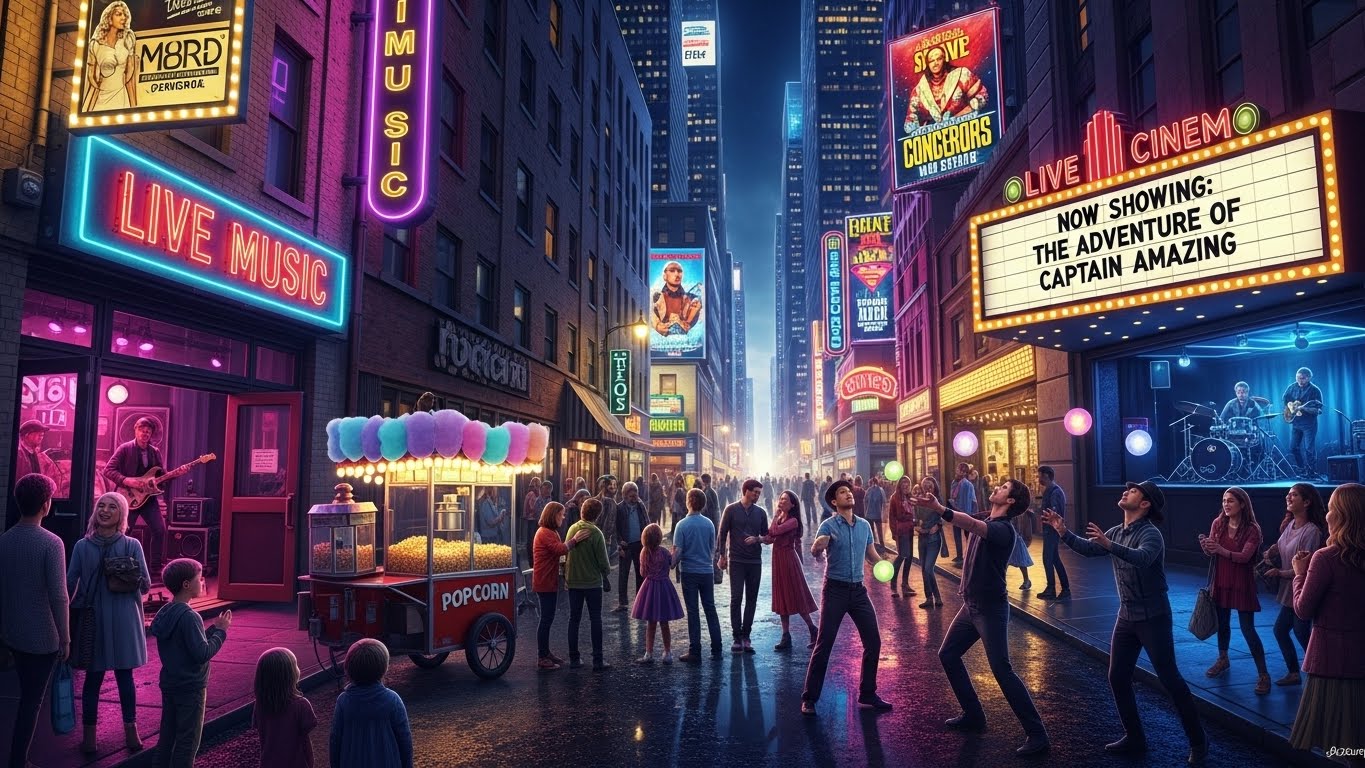
Entertainment has always been an integral part of human culture, evolving through centuries of history. From primitive forms of storytelling around a campfire to the glitzy world of digital content, the way we consume entertainment has undergone dramatic changes. Today, entertainment is no longer confined to traditional mediums like television and cinema. The digital revolution has transformed how we access and interact with various forms of entertainment.
In this blog post, we will explore the fascinating evolution of entertainment, highlighting the key stages of its development, and discussing the impact of technology and culture on how we enjoy entertainment today.
The Early Days: Storytelling, Music, and Theater
Long before movies, television, and video games became central to modern entertainment, people turned to more basic forms of leisure, which often centered around communal gatherings. Storytelling was the first form of entertainment, and it has played an essential role in shaping our understanding of culture and identity. Whether through oral traditions, fables, or myths, ancient people shared tales that would captivate their audiences, teaching lessons, entertaining, and preserving cultural values.
Music, too, was a significant part of early entertainment. From tribal drumming to classical compositions, music was a form of expression and social gathering. People would come together to enjoy performances and rituals, from religious ceremonies to festivals, forming connections that still endure today.
Theater, another cornerstone of early entertainment, dates back to ancient Greece, where dramatic performances were used to explore social, political, and philosophical themes. These theatrical productions were an essential part of public life and set the stage for the future of entertainment.
The Birth of Cinema: A New Era of Visual Storytelling
The 20th century marked a pivotal turning point in the entertainment industry with the invention of cinema. The early 1900s saw the emergence of motion pictures, and in just a few decades, cinema revolutionized how people experienced entertainment. The first silent films, such as Charlie Chaplin’s “The Tramp” (1915), offered an entirely new medium through which stories could be told, one that combined visual artistry, acting, and music.
As technology improved, so did the quality and sophistication of films. The introduction of sound in movies, starting with “The Jazz Singer” (1927), created an even more immersive experience for audiences. This was followed by the colorization of films, which brought a new level of vibrancy to the visual storytelling. The impact of cinema on popular culture was immediate and far-reaching, and Hollywood quickly became the global capital of film production.
Cinema became the dominant form of entertainment for much of the 20th century, influencing fashion, trends, and social values. It created larger-than-life celebrities like Marilyn Monroe, James Dean, and later, Tom Hanks and Julia Roberts, who became household names, embodying the ideals of their time.
The Rise of Television: A Revolution in Home Entertainment
Following the success of cinema, the next big leap in entertainment came with the advent of television in the 1940s and 1950s. The introduction of television sets into households changed the way people experienced entertainment, making it more accessible and convenient than ever before. By the 1960s, nearly every home in the United States had a TV set, and the influence of television began to shape the cultural landscape.
Television shows, which ranged from sitcoms like “I Love Lucy” to drama series like “The Twilight Zone”, offered a new form of entertainment that could be enjoyed in the comfort of one’s home. For the first time, people were able to enjoy a wide variety of programming, from news broadcasts to cartoons to live performances, all without leaving their living rooms.
As television technology improved, color broadcasts, remote controls, and cable TV networks emerged, offering viewers more choice and control over their viewing experiences. This led to the rise of iconic shows like “Friends”, “The Simpsons”, and “The Sopranos”, which became cultural touchstones, influencing generations of viewers.
The 1980s and 1990s saw the birth of video cassette recorders (VCRs) and DVDs, further changing the way people consumed entertainment. Home video rentals, video games, and pay-per-view services became increasingly popular, giving consumers even more ways to engage with their favorite content.
The Digital Revolution: The Internet Changes Everything
While television still dominated entertainment in the late 20th century, the real game-changer came with the rise of the internet in the 1990s and early 2000s. As broadband internet became more widely available, it allowed people to access an unprecedented amount of content from anywhere in the world. Websites like YouTube, which was launched in 2005, transformed how we consumed video content, making it possible for anyone to upload, share, and watch videos on-demand.
The digital age also gave birth to the streaming revolution. Platforms like Netflix, Hulu, and Amazon Prime Video enabled users to watch movies and TV shows without the need for physical media. This shift away from cable and satellite television to on-demand streaming marked a dramatic change in the entertainment landscape.
Streaming services didn’t just change how we watched TV—they also revolutionized how content was produced. Netflix, for example, began to produce its own original content, such as “House of Cards” (2013) and “Stranger Things” (2016), signaling a new era of binge-worthy television. The success of streaming services has led to the decline of traditional television viewing, as more and more consumers prefer the flexibility and convenience that streaming offers.
Social Media and User-Generated Content: A New Era of Participation
As the internet evolved, it also gave rise to new forms of entertainment that put the power of content creation in the hands of the users. Social media platforms like Facebook, Instagram, and TikTok have become central hubs for entertainment, with millions of users creating and sharing content every day.
TikTok, in particular, has revolutionized how people create and consume short-form video content. The platform’s algorithm encourages viral trends, with users often jumping on challenges or recreating popular songs and dances. Many social media influencers and content creators have turned their online presence into full-time careers, partnering with brands or even creating their own merchandise.
User-generated content has democratized entertainment, enabling people from all walks of life to showcase their talents and creativity. Whether it’s a funny meme, a viral dance, or a cooking tutorial, social media has given rise to an entirely new form of entertainment that’s often more personal and relatable than traditional media.
Virtual Reality (VR) and Augmented Reality (AR): The Future of Entertainment
Looking ahead, the future of entertainment lies in emerging technologies like virtual reality (VR) and augmented reality (AR). VR offers fully immersive experiences, where users can interact with virtual worlds through headsets and motion tracking. This technology has already made waves in the gaming industry, with titles like “Beat Saber” and “Half-Life: Alyx” providing players with immersive, interactive experiences.
On the other hand, augmented reality overlays digital content onto the real world, often through mobile devices. Apps like Pokémon Go, which became a global phenomenon in 2016, have demonstrated how AR can create interactive entertainment experiences that blend the physical and digital worlds.
As VR and AR technologies continue to evolve, they will likely expand beyond gaming and entertainment to other fields such as education, tourism, and retail. These technologies could offer entirely new ways of experiencing entertainment, blurring the lines between the real and virtual worlds.
The Impact of Globalization on Entertainment
One of the most significant developments in recent years has been the globalization of entertainment. The internet has connected people across continents, allowing for the exchange of cultural ideas, music, movies, and TV shows in ways never seen before. Shows like “Money Heist” (Spain) and “Squid Game” (South Korea) have become international sensations, demonstrating how entertainment transcends cultural boundaries in the digital age.
The rise of streaming platforms has allowed international content to find audiences far beyond its country of origin. Whether it’s Bollywood films, Korean dramas, or European documentaries, global audiences now have easy access to a diverse range of content. This interconnectedness has fostered greater cultural exchange and diversity within the entertainment industry.
Conclusion: The Endless Possibilities of Entertainment
Entertainment has come a long way, from its humble beginnings in oral storytelling and live performances to the interactive and immersive experiences of today. The digital revolution has made entertainment more accessible and diverse than ever before, and as technology continues to evolve, the possibilities are endless.
Whether we’re watching a movie on our smartphones, attending a live concert in virtual reality, or creating content that could go viral on social media, the ways in which we engage with entertainment will continue to transform. What’s clear is that, no matter how it evolves, entertainment will always remain a fundamental part of our lives—connecting us, inspiring us, and helping us navigate the world around us.