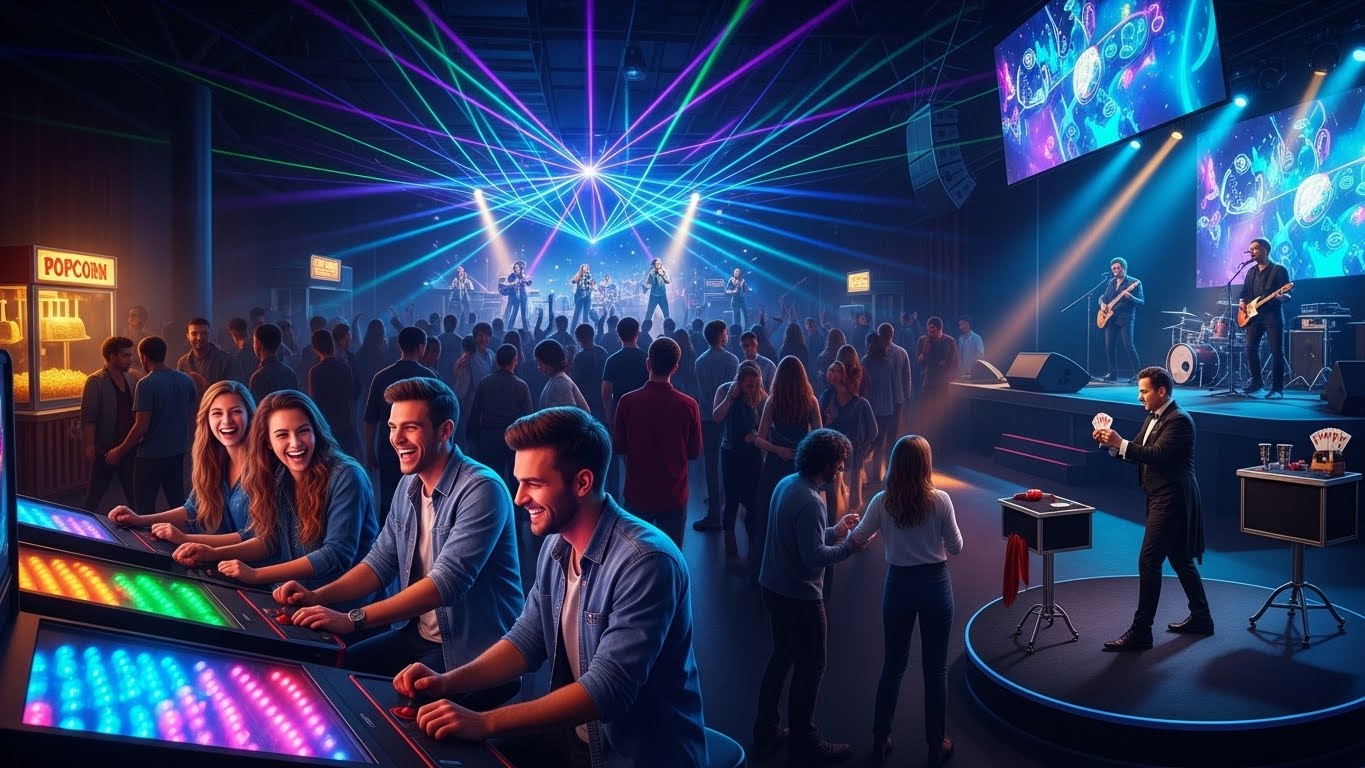
Entertainment is an inherent part of the human experience. From the earliest moments of human history, people have sought ways to pass the time, enjoy themselves, and escape the harsh realities of daily life. As cultures evolved, so did the forms of entertainment, each new generation adapting its methods to the tools and technology available at the time. What began as oral storytelling and basic musical performances has grown into a vast industry encompassing cinema, television, video games, and digital platforms. This blog post explores the fascinating journey of entertainment from its ancient roots to the modern digital era, examining how it has shaped human culture and continues to evolve today.
The Origins of Entertainment: Storytelling and Rituals
The earliest forms of entertainment were deeply rooted in culture and community. Long before written language existed, people gathered around campfires, in village squares, or in religious ceremonies to listen to stories. Storytelling was the earliest form of shared entertainment, with oral traditions being passed down from generation to generation. These stories weren’t just meant to entertain; they were also used to preserve history, teach moral lessons, and bind communities together.
In ancient civilizations, storytelling took on various forms. In Mesopotamia, the Epic of Gilgamesh became one of the first written stories. In Greece, plays performed in amphitheaters allowed communities to engage with complex themes of morality, politics, and human nature. The works of playwrights like Sophocles and Aeschylus are considered some of the earliest examples of entertainment that also served as a platform for social commentary.
The role of music and dance in early entertainment cannot be understated either. From tribal dances and rituals to the musical performances of ancient Greece and Rome, rhythm and melody have long been an essential part of human expression. These early performances helped communities bond, celebrate, and communicate emotions that words alone could not express.
The Rise of Theater and Live Performances
As societies became more complex, entertainment began to formalize and diversify. Theater, music, and live performances took center stage in the ancient world, with each civilization contributing its unique style to the entertainment landscape. Ancient Greek theater, for example, introduced the concept of the stage play, which allowed for public performances that would become central to cultural life for centuries to come.
Rome, too, embraced live entertainment, especially in the form of gladiatorial combat and theatrical plays. The Romans built enormous arenas like the Colosseum, where thousands of spectators could watch not just gladiators fight, but also chariot races, mock naval battles, and theatrical performances. The concept of live performance as a form of mass entertainment was born during this period and would shape the development of entertainment in the centuries to follow.
In the Middle Ages, the rise of traveling troupes and pageants brought entertainment to the masses, with performances often centered around religious themes. As the Renaissance began, there was a resurgence in the popularity of theater, with playwrights like William Shakespeare transforming English drama. Shakespeare’s work, which combined humor, tragedy, and political intrigue, would go on to have a lasting impact on the world of theater.
The growing popularity of live entertainment, including opera, symphonies, and theatrical plays, continued through the 18th and 19th centuries. In the Victorian era, the theater became a social event for the upper classes, while circuses, fairs, and public performances continued to attract the working classes. These forms of entertainment, often centered around performance and spectacle, became an important part of societal life in Western cultures.
The Advent of Film: Revolutionizing Entertainment
In the early 20th century, the invention of film changed the landscape of entertainment forever. The Lumière brothers’ first public screening of a moving picture in 1895 marked the beginning of cinema as a global form of entertainment. Initially, film was seen as a novelty, a passing amusement that showcased technological innovation. However, the rise of Hollywood and the proliferation of movie theaters in the 1920s cemented cinema as a dominant cultural force.
The introduction of sound in film, culminating with the 1927 release of The Jazz Singer, brought an entirely new dimension to the movie-going experience. Films no longer needed to rely solely on visuals and title cards to convey emotion and narrative; sound, music, and dialogue opened up new storytelling possibilities. The 1930s and 1940s, known as the Golden Age of Hollywood, brought iconic actors, directors, and films that are still celebrated today.
Throughout the 20th century, film continued to grow in importance, with the emergence of new genres, such as musicals, dramas, horror, and action films. Movies became an escape for people during difficult times, such as the Great Depression and World War II. As film production techniques advanced, cinema transformed into a multi-billion-dollar industry, with movie theaters drawing millions of people for a shared communal experience.
In the late 20th century, home video became a game-changer, allowing audiences to watch movies from the comfort of their homes. VHS tapes, DVDs, and Blu-ray discs made it easier to access a wide variety of films, and the convenience of home viewing changed how we consumed entertainment.
The Age of Television: Bringing Entertainment into the Home
Television became the defining medium of entertainment in the mid-20th century, changing the way people consumed content forever. In the 1950s, television began to enter homes across America, bringing news, entertainment, and live events into people’s living rooms. The emergence of TV shows, such as I Love Lucy, The Ed Sullivan Show, and The Twilight Zone, provided viewers with regular programming that would become the foundation for modern television.
Television allowed for greater variety and accessibility in entertainment. In addition to dramas and comedies, audiences could now watch sports, variety shows, and news broadcasts on a daily basis. TV quickly became a central part of family life, and advertisers took advantage of this new platform to promote products to the masses.
By the 1980s, cable television took the TV experience to a new level, offering a multitude of channels catering to specific interests. Networks like HBO, CNN, and MTV expanded the scope of entertainment, offering premium content, 24-hour news, and music videos, respectively. For the first time, viewers had access to an unprecedented array of programming options.
In the 1990s and 2000s, the advent of satellite TV, digital cable, and DVR technology revolutionized the way we watched television, allowing for even more flexibility and control over what and when we watched.
The Digital Era: Streaming and Online Entertainment
The turn of the 21st century brought about a massive shift in how entertainment was consumed. The rise of the internet and digital technologies opened up entirely new avenues for content distribution. Streaming services like Netflix, Hulu, and Amazon Prime emerged, giving viewers the ability to watch movies and TV shows on-demand from the comfort of their own homes.
The digital revolution also brought about a major change in the music industry. Platforms like Spotify and Apple Music allowed users to stream music at any time, eliminating the need for physical media like CDs or vinyl records. The rise of music streaming has transformed the way we discover and listen to music, with personalized playlists and recommendations making it easier than ever to find new songs and artists.
Perhaps one of the most significant shifts in entertainment came with the rise of social media platforms like Facebook, Twitter, YouTube, and TikTok. These platforms not only allowed people to connect with one another but also enabled the creation and sharing of content. YouTube gave rise to a new generation of content creators, while TikTok brought about viral trends and challenges that reached millions of users worldwide. Social media has made entertainment more interactive, with audiences engaging directly with content creators in real time.
Online gaming also flourished in the 21st century, with the internet allowing players to connect and compete with one another across the globe. Multiplayer games like World of Warcraft, Fortnite, and League of Legends have created expansive virtual worlds where millions of people can interact, form communities, and even make a career out of gaming.
The Future of Entertainment: Virtual Reality and Artificial Intelligence
As technology continues to evolve, the future of entertainment promises to be even more immersive and interactive. Virtual reality (VR) and augmented reality (AR) are expected to play a major role in the next wave of entertainment. VR, for instance, has the potential to revolutionize gaming, movies, and even live events by allowing users to fully immerse themselves in virtual worlds. Imagine attending a concert or sporting event from the comfort of your living room, experiencing the event as if you were physically there.
Augmented reality, which overlays digital elements onto the real world, has already been used in apps like Pokémon GO, and it’s likely to expand into other areas of entertainment. AR could enhance the movie-watching experience by allowing users to interact with characters or scenes from their favorite films in new ways.
Artificial intelligence (AI) is also set to have a profound impact on the entertainment industry. AI can be used to create personalized recommendations for movies, music, and games, ensuring that users are always discovering content that matches their tastes. In the future, AI could even be used to generate original content, such as music, stories, and even entire films, with minimal human involvement.
Conclusion: The Constant Evolution of Entertainment
The journey of entertainment has been long and transformative, from the earliest oral traditions to the digital experiences we engage with today. With the rise of streaming services, social media, and emerging technologies like VR and AI, entertainment has become more accessible, diverse, and immersive than ever before. As technology continues to advance, we can expect entertainment to evolve in even more exciting ways, creating new forms of connection, expression, and enjoyment.