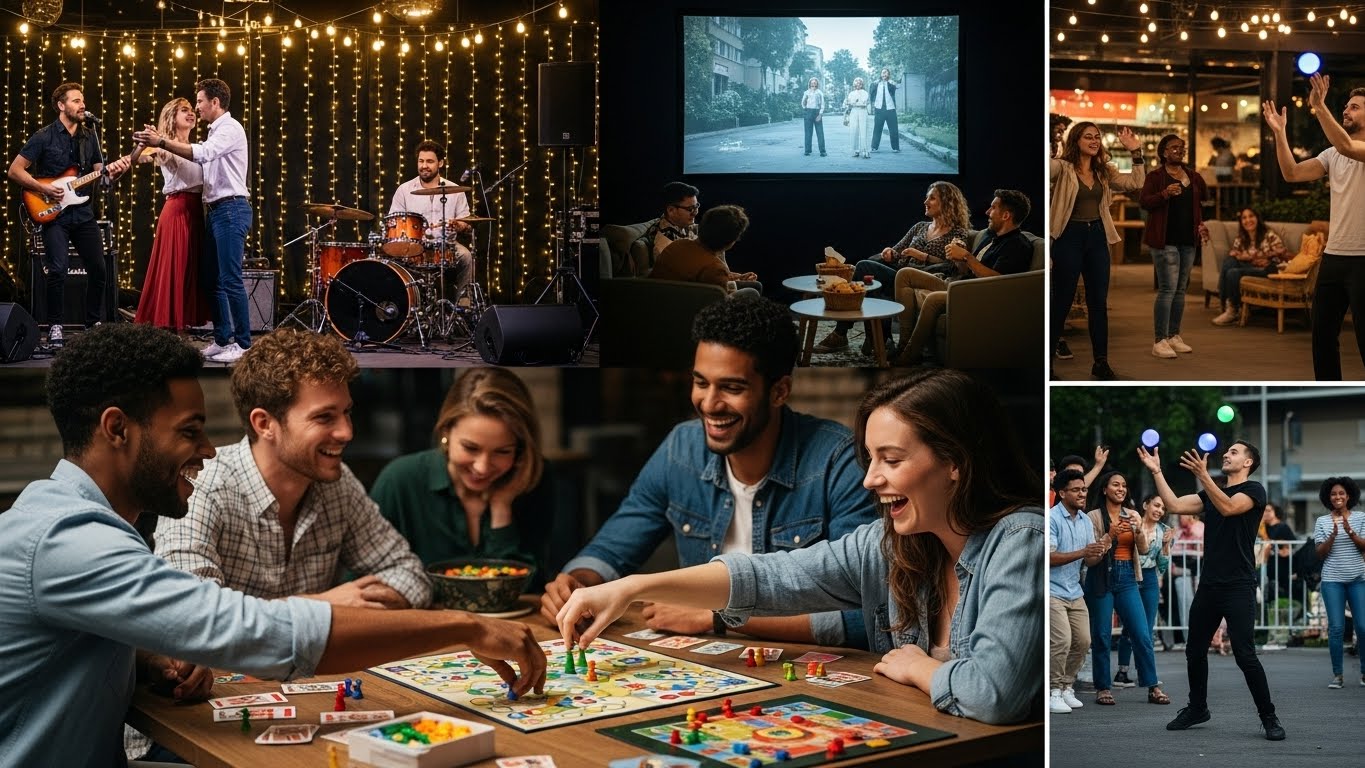
Entertainment has been an essential part of human civilization for millennia. From the earliest forms of storytelling to today’s immersive digital experiences, entertainment has not only been a source of joy but also a reflection of culture, emotion, and creativity. It has the power to unite people, influence ideas, and even shape entire societies. As technology continues to evolve, so does entertainment, with new mediums emerging every day. In this blog, we explore the multifaceted world of entertainment, its history, its influence on society, and what the future holds for this ever-changing domain.
The Origins of Entertainment: From Oral Traditions to Performances
Entertainment, in its most primitive form, began with oral storytelling. Before writing systems were developed, people gathered around campfires to tell stories, pass on knowledge, and express their emotions. These early narratives were often about survival, gods, nature, and human experiences, and they were an essential means of preserving culture. These stories were passed down through generations, evolving over time but still carrying the essence of the communities that created them.
As civilizations advanced, so did the forms of entertainment. The ancient Greeks gave birth to theater, which became a cultural cornerstone for both their entertainment and philosophical exploration. Greek tragedies and comedies, performed in large outdoor amphitheaters, became the foundation of Western drama. Ancient Rome, known for its grandeur, popularized public spectacles, such as gladiatorial combat and chariot races, in massive arenas like the Colosseum. These early forms of entertainment were not just for amusement; they were often used to communicate societal values, power structures, and moral lessons.
Cinema: A Window to Imaginations and Ideas
One of the most significant developments in modern entertainment has been the invention of cinema. The art of filmmaking has become a universal medium for storytelling, offering the ability to transport viewers to different times, places, and realities. From the early silent films of the 1920s to today’s visually spectacular blockbusters, cinema has captivated audiences by blending narrative, emotion, and technology.
Movies allow us to experience an entire range of human emotions, from joy and laughter to fear and sorrow. Through characters, plots, and dialogue, films open our eyes to new perspectives and experiences. Over the years, movies have not only entertained us but have also challenged our thinking, questioned societal norms, and inspired social change. Iconic films like Schindler’s List or To Kill a Mockingbird have opened discussions about human rights, injustice, and the power of empathy.
Technology continues to shape the future of cinema. With advancements in CGI (computer-generated imagery), filmmakers can create stunning visual effects that were once unimaginable. From the fantastical worlds in Avatar to the explosive action scenes in the Marvel Cinematic Universe, movies now offer experiences that feel more immersive than ever before.
The Power of Music: A Universal Language
Music has always been a central part of entertainment, transcending language, culture, and time. From the rhythmic beats of tribal drums to the sophisticated symphonies of classical composers, music has the unique ability to connect people on an emotional level. It resonates with the soul, evoking memories, influencing moods, and even altering perceptions.
Today, music is more accessible than ever before. Streaming platforms have revolutionized the way people consume music, making it possible to access millions of songs with just a click. Genres have become more diverse, and music from different parts of the world is easily available, leading to a cross-pollination of cultural sounds. Whether it’s the rise of Afrobeat, the global popularity of K-pop, or the resurgence of retro sounds in modern pop music, music continues to evolve and bring people together.
Live performances, from intimate concerts to massive festivals, offer fans the opportunity to connect with their favorite artists and other like-minded people. Music festivals like Coachella or Glastonbury have become cultural landmarks where not only music but also fashion, art, and social movements are celebrated.
Television and Streaming: The New Age of Storytelling
Television has long been a staple of entertainment, but the rise of streaming services has dramatically shifted how people engage with content. In the past, TV was something you watched at a set time, with limited options available. Now, with services like Netflix, Hulu, and Amazon Prime Video, people have access to an endless library of movies, shows, and documentaries whenever they want, on virtually any device.
The impact of streaming platforms on storytelling cannot be overstated. Traditional TV networks were often bound by strict schedules and programming limitations, but platforms like Netflix have allowed for more experimental and diverse content. The “Golden Age of TV” has ushered in complex narratives, multi-layered characters, and shows that take risks in ways traditional TV did not. Series like Breaking Bad, The Crown, and Stranger Things have become cultural phenomena, attracting millions of viewers and even influencing public discourse.
What makes streaming so powerful is its ability to cater to niche audiences. There are shows for everyone—whether you’re into documentaries about history, sci-fi epics, or reality TV. The ability to binge-watch an entire season at once has also changed how people consume stories, with entire cultural conversations happening around popular series.
Video Games: Interactive Entertainment at Its Best
While movies and music are primarily passive forms of entertainment, video games have introduced a new level of interactivity. Gaming has become a billion-dollar industry, offering everything from simple puzzle games to expansive, open-world adventures. Games like The Legend of Zelda, Grand Theft Auto, and Fortnite have redefined what it means to be entertained, blending storytelling, technology, and gameplay into an immersive experience.
What sets video games apart from other forms of entertainment is the level of engagement they offer. Unlike watching a film or listening to music, playing a video game requires active participation. Players make decisions that impact the story, collaborate with others in multiplayer environments, or explore vast digital worlds. Games also foster a sense of community, with online multiplayer platforms like Fortnite and League of Legends bringing players together across the globe.
Esports, the competitive side of gaming, has exploded in popularity in recent years. Professional gaming tournaments now attract millions of viewers, and players have become celebrities in their own right. Video games are no longer just a hobby—they are a career for some, and a form of entertainment that rivals traditional sports in terms of viewership and engagement.
The Influence of Social Media on Modern Entertainment
Social media has become an integral part of the entertainment landscape, enabling new ways for people to connect, share, and create content. Platforms like Instagram, TikTok, YouTube, and Twitter allow individuals to showcase their creativity and build massive audiences. Social media influencers, once ordinary people, have become global stars, shaping trends and culture in ways never before possible.
What makes social media such a powerful tool for entertainment is its ability to provide instant access to a global audience. A viral video on TikTok can catapult an unknown artist into the spotlight, while Instagram can help a musician gain millions of followers with a single post. Social media has leveled the playing field, allowing anyone with an internet connection and a creative idea to participate in the entertainment world.
However, social media also presents challenges. The pressure to produce content regularly, the impact of online criticism, and the rise of influencer culture have created new pressures on creators and consumers alike. Despite these challenges, social media has undeniably revolutionized how we consume and create entertainment.
The Future of Entertainment: Immersive Experiences
As technology continues to evolve, so does entertainment. The future promises even more immersive experiences, with virtual reality (VR) and augmented reality (AR) changing how people engage with content. Imagine stepping into the world of your favorite video game or watching a movie where you can interact with the characters and influence the outcome. These technologies are already being used in gaming and film, and as they improve, they will offer even more ways to experience entertainment in ways we could never have imagined.
Artificial intelligence (AI) is also playing a role in shaping the future of entertainment. AI is already being used to create music, write scripts, and even generate realistic visuals. As AI continues to advance, it could have a profound impact on how stories are created and consumed. For example, we could see AI-generated films or personalized content tailored to each individual’s tastes.
The future of entertainment will likely be a blend of technology and human creativity. As new tools emerge, they will open up new possibilities for artists and consumers alike, creating experiences that blur the lines between reality and fiction.
Conclusion: The Endless Journey of Entertainment
Entertainment is an essential part of the human experience. It has the power to entertain, educate, challenge, and inspire. From its roots in oral traditions to the modern digital age, entertainment has evolved into a multifaceted industry that touches nearly every aspect of our lives. Whether through movies, music, television, video games, or social media, entertainment connects us to each other and to the world around us.
As technology continues to advance, we can only imagine the exciting new forms of entertainment that lie ahead. What is certain is that entertainment will continue to play an integral role in shaping culture, expressing creativity, and bringing people together. The journey of entertainment is far from over, and its future holds limitless potential.