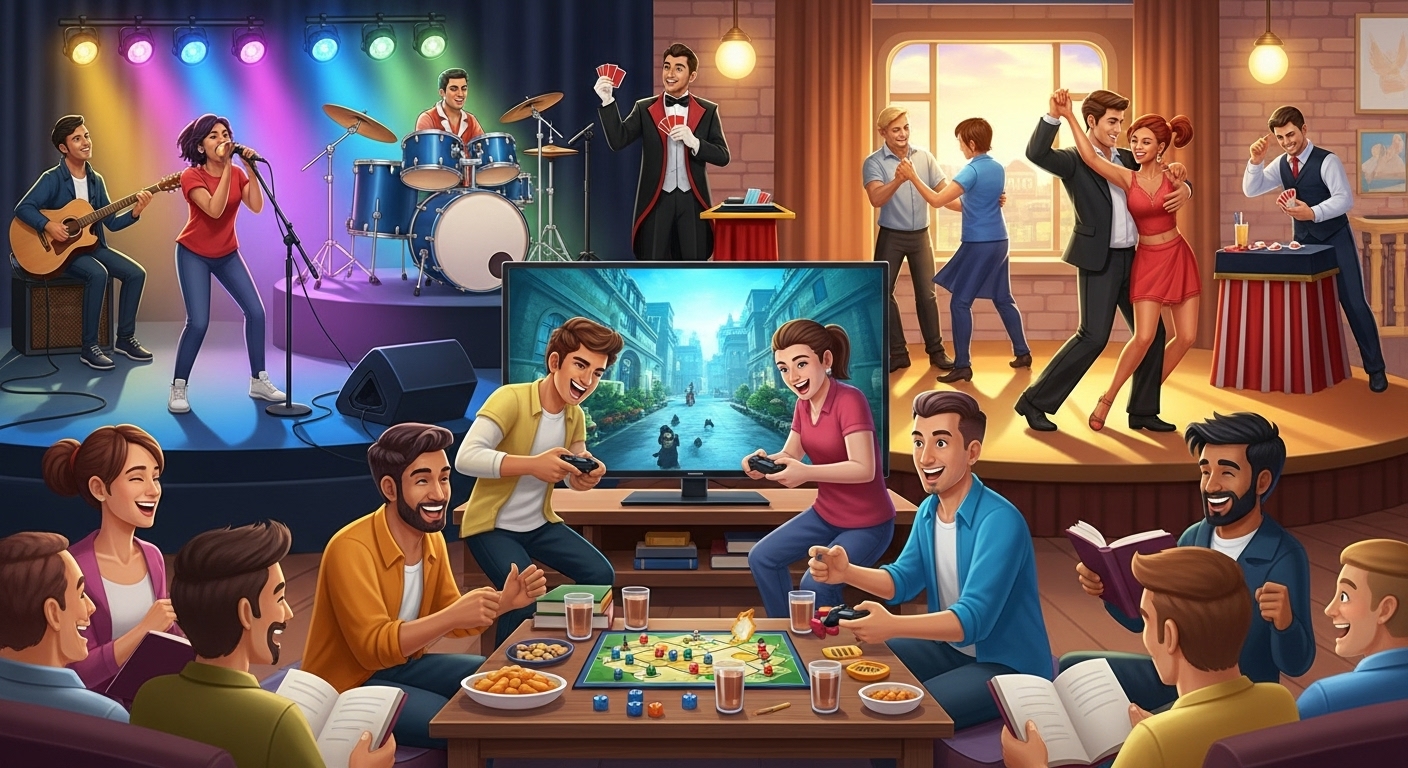
Entertainment has always been a cornerstone of human civilization, serving as a means of escape, connection, and cultural expression. From ancient forms of storytelling to the latest technological innovations, entertainment has continually evolved, reflecting the changing needs, values, and capabilities of society. Today, the entertainment industry is a multibillion-dollar global powerhouse, deeply integrated into our daily lives. This transformation, however, didn’t happen overnight. The journey of entertainment spans centuries, driven by creativity, technological advancements, and shifting cultural dynamics. In this blog, we will explore how entertainment has changed over time, the factors that have driven its evolution, and where it may be headed in the future.
The Roots of Entertainment: Oral Traditions and Live Performances
Long before the invention of the printing press or the first motion pictures, entertainment was rooted in live experiences and oral traditions. In ancient societies, storytelling was one of the most vital forms of entertainment. Stories were passed down through generations, often as a way to preserve history, communicate moral lessons, or entertain the masses. These stories were shared in communal settings, whether around a campfire or in grand feasts. The Epic of Gilgamesh, Homer’s Iliad and Odyssey, and the countless folktales of indigenous cultures are all examples of how entertainment served to unite people, creating shared experiences and cultural identities.
Live performances, such as theatrical plays and musical concerts, also formed the foundation of entertainment for centuries. In Ancient Greece, theater was not just a form of entertainment but a way to explore complex themes such as fate, morality, and human nature. The works of playwrights like Sophocles and Euripides are still performed today, a testament to their enduring appeal. Similarly, live musical performances, from ancient tribal rituals to the concerts of classical composers like Beethoven and Mozart, showcased the power of music to captivate audiences and elicit emotional responses.
Entertainment, in these early days, was communal, participatory, and often educational. It was a direct way for individuals to connect with one another and with the stories and traditions that shaped their world.
The Rise of Print Media: A New Era of Mass Entertainment
With the invention of the printing press in the 15th century, entertainment underwent a significant transformation. The mass production of books, pamphlets, and newspapers allowed for the spread of literature and information to a much wider audience. This era marked the birth of a new kind of entertainment: one that could be consumed privately and individually. Reading, which had previously been an activity reserved for the elite, became accessible to people from all walks of life, spurring a cultural shift toward literacy and intellectual curiosity.
The rise of print media led to the emergence of novels, poetry, and newspapers as popular forms of entertainment. Writers like William Shakespeare, Charles Dickens, and Jane Austen gained widespread recognition during this period, their works shaping cultural norms and offering a reflection of the human condition. Print media also paved the way for the mass production of newspapers, providing people with daily access to news, stories, and advertisements, all of which contributed to the development of modern entertainment.
The printed word also played a role in the development of other forms of entertainment, such as the theater. Plays were published and distributed in written form, allowing for performances to be staged in different parts of the world. The written word became a powerful vehicle for both entertainment and social change, laying the groundwork for the mass media culture that would dominate the next few centuries.
The Golden Age of Film and Radio: The Birth of Mass Media Entertainment
The early 20th century marked the arrival of two revolutionary forms of entertainment: film and radio. These mediums gave birth to the age of mass media, where entertainment was no longer just for the elite or the literate but for the masses. Cinema, in particular, became one of the most influential and accessible forms of entertainment, attracting millions of people to theaters to watch stories come to life on the big screen.
Hollywood’s “Golden Age” in the 1930s and 1940s established film as a cultural powerhouse. Movies like Gone with the Wind, The Wizard of Oz, and Casablanca not only entertained but also shaped societal values, offering a window into the dreams, desires, and struggles of the time. Film also brought with it iconic stars like Humphrey Bogart, Marilyn Monroe, and James Dean, whose images became synonymous with popular culture.
At the same time, radio emerged as a dominant form of entertainment, providing people with a constant stream of music, news, and drama. The radio brought families together, with programs like The Lone Ranger and The Shadow offering serialized stories that listeners could follow week after week. During wartime, radio also played a crucial role in informing the public, making it an essential medium for communication and entertainment alike.
Radio and film were the first truly mass forms of entertainment, capable of reaching millions of people at once. They marked a shift from the communal, local experiences of earlier forms of entertainment to a more centralized, global model where stories and performances could be consumed by anyone, anywhere.
The Television Revolution: Entertainment in Every Home
The next major leap in the evolution of entertainment came with the advent of television. By the 1950s, television had become a fixture in most American homes, and it wasn’t long before it spread to other parts of the world. Television brought entertainment directly into people’s living rooms, revolutionizing how we consumed media. No longer did people have to go out to theaters or listen to the radio to get their fix of entertainment; now, it was available at the turn of a dial.
The 1950s and 1960s saw the rise of iconic TV shows like I Love Lucy, The Ed Sullivan Show, and The Twilight Zone, each of which left an indelible mark on popular culture. Television also gave rise to the concept of “prime-time” programming, where families would gather in front of the TV to watch their favorite shows together. The shared experience of watching television created a new form of social connection, as people discussed episodes, characters, and storylines in person or on the phone.
Television also brought with it the rise of news broadcasts, which transformed the way people consumed information. Events like the moon landing in 1969 and the assassination of President John F. Kennedy in 1963 were watched by millions of people in real-time, underscoring the power of television to shape public perception and create shared experiences.
The television era marked the beginning of entertainment as a major industry. Networks, advertisers, and producers began to understand the commercial potential of the medium, leading to an explosion of content that catered to virtually every demographic. By the 1980s and 1990s, cable TV and satellite television provided even more specialized content, offering channels dedicated to specific genres, interests, and lifestyles.
The Digital Revolution: The Internet and the Rise of On-Demand Entertainment
The internet fundamentally changed the way we access and engage with entertainment. The early 2000s saw the rise of digital platforms that offered on-demand content, allowing users to consume media at their convenience. The advent of services like YouTube, Netflix, and Spotify revolutionized how we watch movies, TV shows, and listen to music.
Streaming services have become the backbone of the modern entertainment industry. No longer do we have to rely on traditional cable or satellite providers to access content. Now, we can stream movies, TV shows, and music directly to our phones, tablets, or smart TVs, giving us unprecedented access to entertainment on our own terms. In fact, streaming has become so ubiquitous that it has redefined how we approach content consumption, giving rise to the concept of binge-watching and the decline of scheduled programming.
Social media platforms like Instagram, Twitter, and TikTok have also created new opportunities for entertainment, allowing individuals and influencers to create and share content that can go viral in a matter of hours. User-generated content has become a dominant force in the entertainment world, with millions of people sharing videos, memes, and stories that often rival professional productions in terms of popularity and cultural influence.
The internet has also democratized content creation. With a camera and an internet connection, anyone can become a creator, uploading videos, music, or written content for a global audience. This has given rise to a new generation of independent creators who can bypass traditional media gatekeepers and reach audiences directly.
The Future of Entertainment: Virtual Reality, AI, and Interactive Experiences
As technology continues to evolve, so too will the entertainment industry. The future promises exciting new frontiers for how we engage with content. Virtual reality (VR) and augmented reality (AR) are set to revolutionize how we experience entertainment, making it more immersive and interactive. VR has the potential to transform everything from video games to movies, allowing us to step into the story and interact with the world around us in a way that was previously unimaginable.
Artificial intelligence (AI) is also poised to play a major role in the future of entertainment. AI can be used to create personalized recommendations for music, movies, and TV shows based on our preferences, making the experience even more tailored to the individual. In the realm of content creation, AI-generated music, films, and even video games are becoming more sophisticated, pushing the boundaries of what’s possible in storytelling.
Interactive entertainment, such as choose-your-own-adventure style movies or video games that adapt based on player choices, is likely to become more prevalent. Audiences will no longer be passive consumers but active participants in the stories they experience.
Conclusion: Entertainment in an Ever-Changing World
From the ancient art of storytelling to the immersive worlds of virtual reality, entertainment has continuously evolved to meet the needs and desires of society. Each new technological advancement has brought with it new ways to entertain, engage, and connect with audiences.